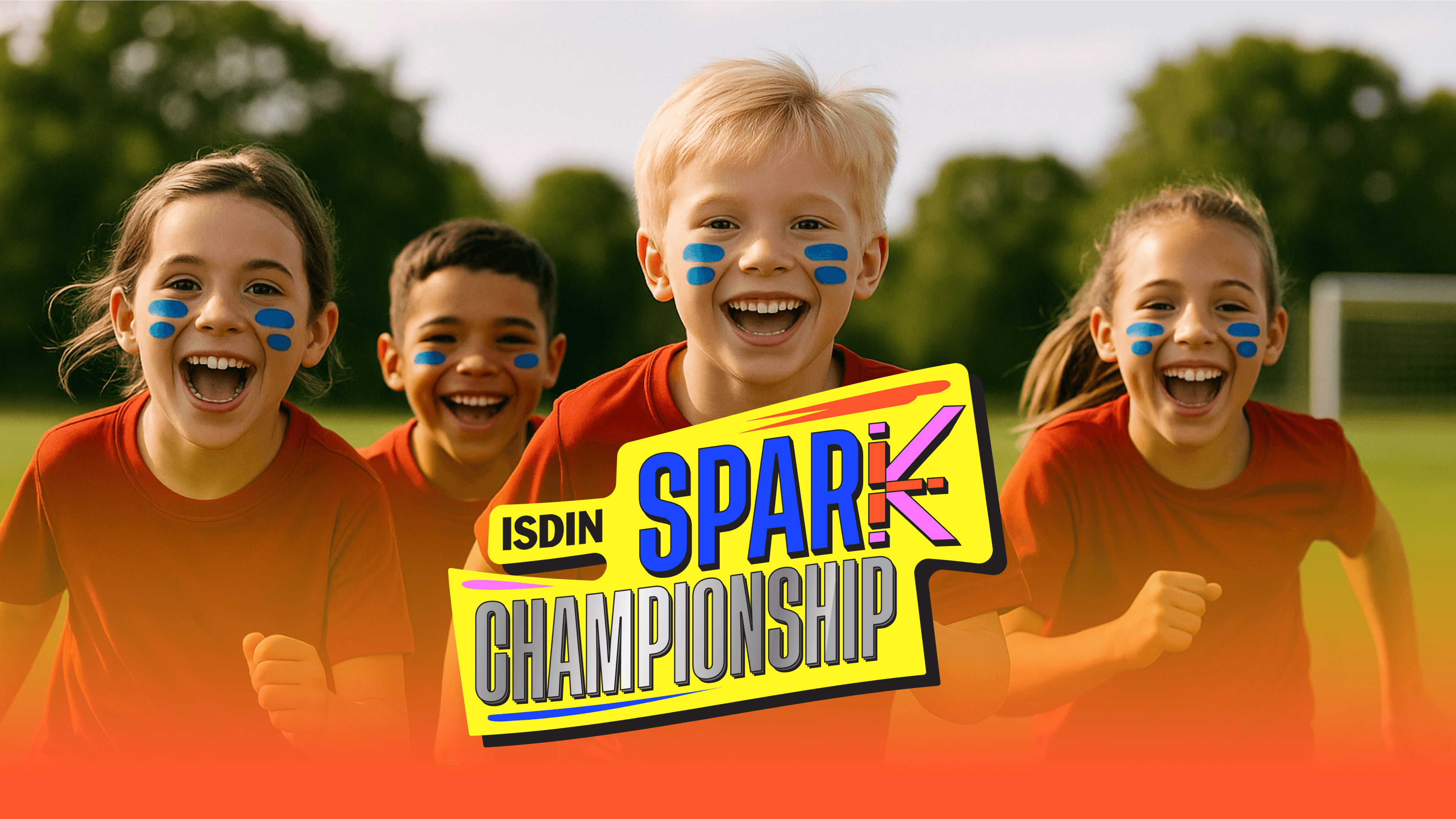
ISDIN SPARK
A service ecosystem that builds sun-safety habits in children through play, education, and school-based reinforcement
00
Problem
ISDIN challenged teams to design a solution that helps children aged 3–11 build consistent sunscreen habits. Despite high awareness among parents, sunscreen application often breaks down in real-life contexts such as schools, outdoor play, and sports activities. The project required a service-led approach, addressing behavior change across home, school, and outdoor environments, while remaining engaging for children and practical for parents and teachers.
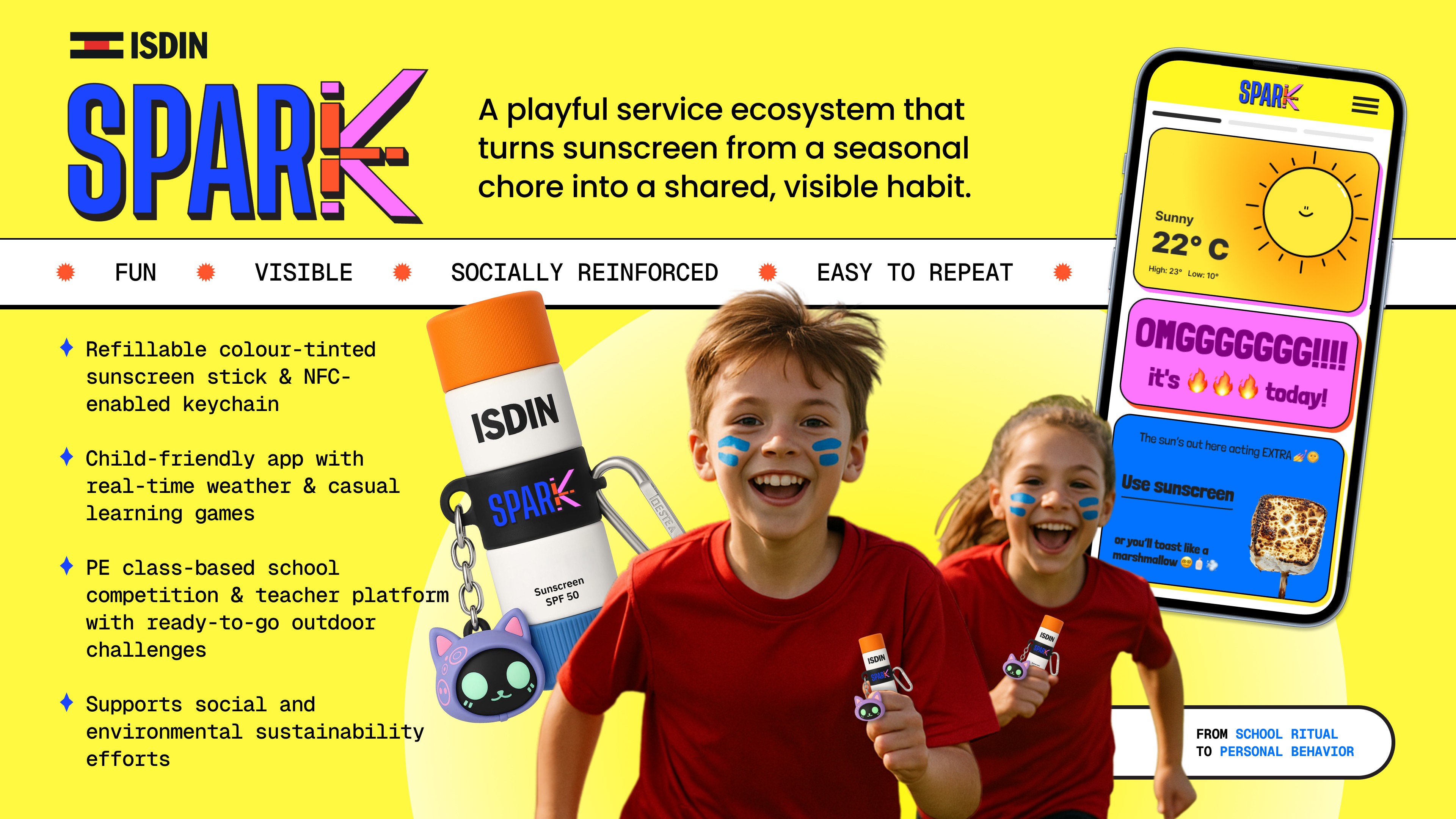
SPARK reframes sun protection from a rule enforced by adults into a habit children adopt independently. Designed as a multi-touchpoint service, it integrates sun safety into everyday outdoor routines through play, visibility, and shared responsibility. By combining physical products, digital experiences, and school-led activities, SPARK reduces parental burden while helping children recognize sun cues, make informed choices, and build long-term protective behaviors that feel natural rather than enforced.
I contributed across all phases of the project, from research and workshop design to synthesis, service concept development, and prototyping. I led the design of research activities with children and parents, including the creation of workshop tools grounded in child development principles. I played a key role in sense-making, mapping stakeholders, systems, and service flows, and translating complex insights into a coherent, multi-layered service. Visual and interaction design were used intentionally as tools to clarify systems, align stakeholders, and bring the service concept to life.
Research & Discovery
We began by exploring why sunscreen habits fail in practice, even when parents understand their importance.
Research Methods
Desk research on children’s health behavior and habit formation
Parent interviews focused on daily routines and friction points
Workshops with parents and children, using co-creation and play-based activities
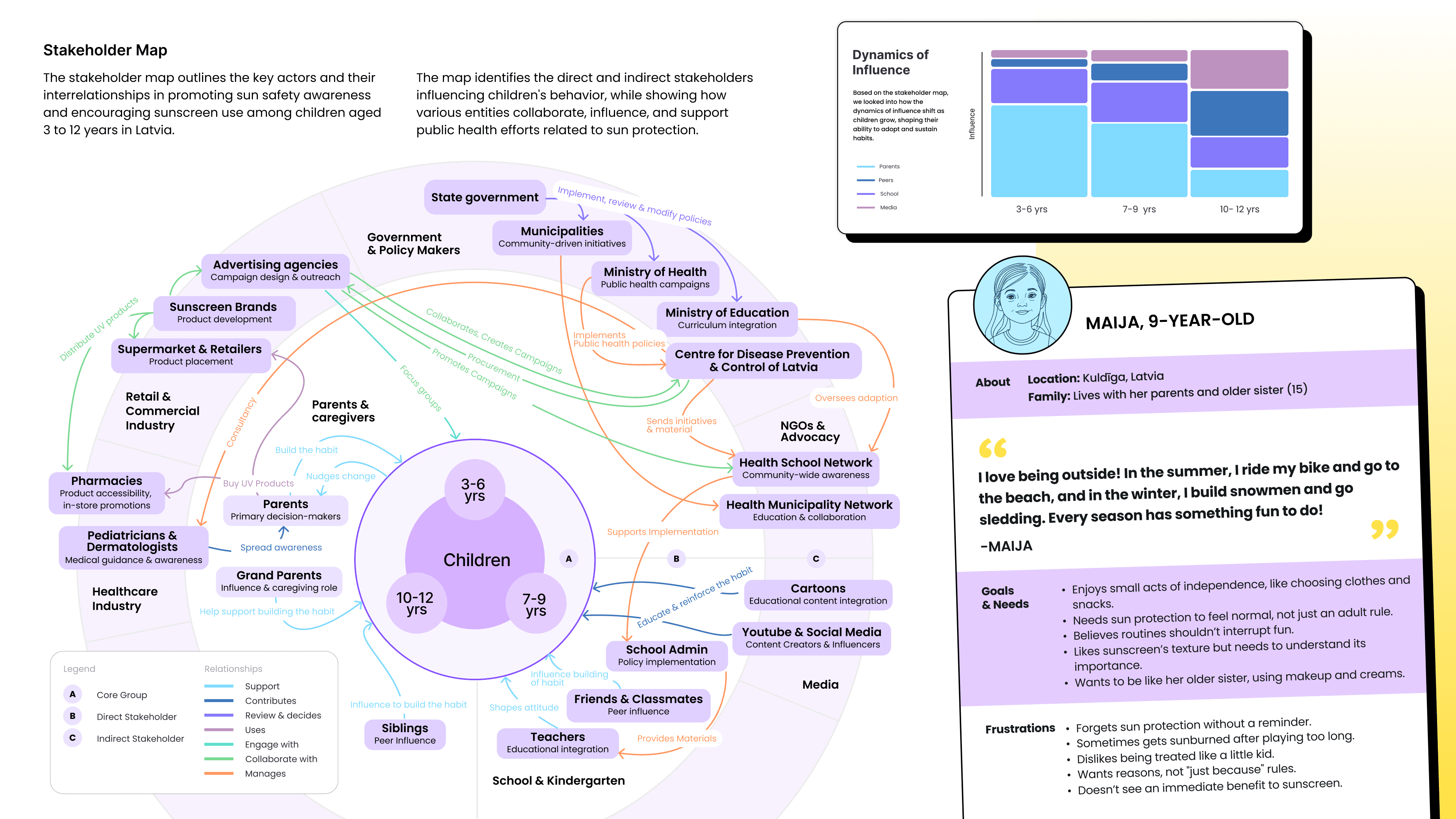
Stakeholder analysis including schools and sports teachers
Key Insights
Sunscreen is perceived as a medical task, not a child-owned habit
Children resist sunscreen because it interrupts play
Schools and sports environments lack structured sun-safety systems
Parents alone cannot sustain the habit without institutional support
These insights revealed that sunscreen adoption is not a product problem, but a service and behavior design challenge.
How might we help children build a positive, long-term relationship with sunscreen by embedding sun protection into play, learning, and shared routines across home and school environments?
Ideation & Synthesis
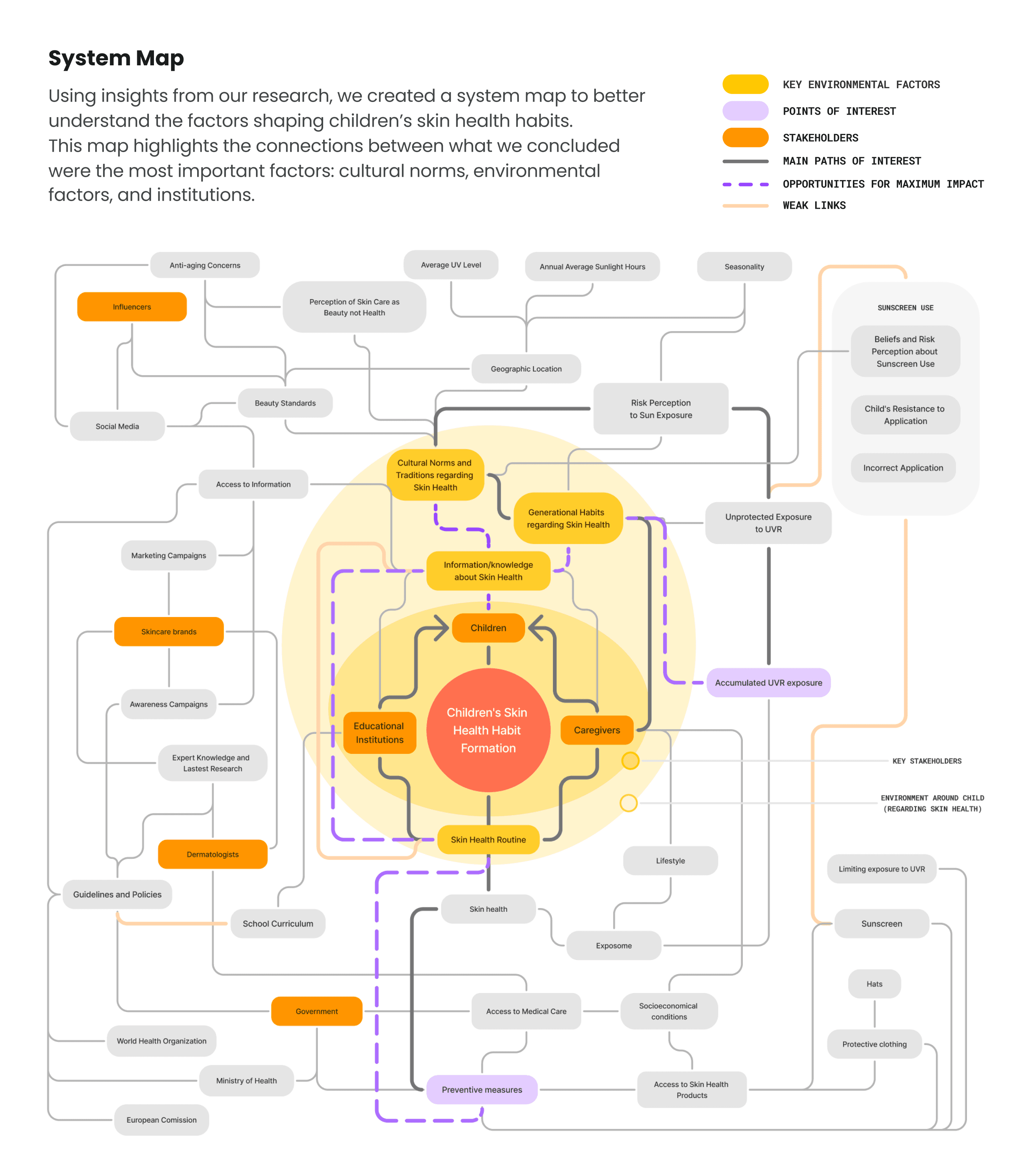
We shifted from designing a single intervention to creating a multi-layered service ecosystem that supports habit formation across contexts.
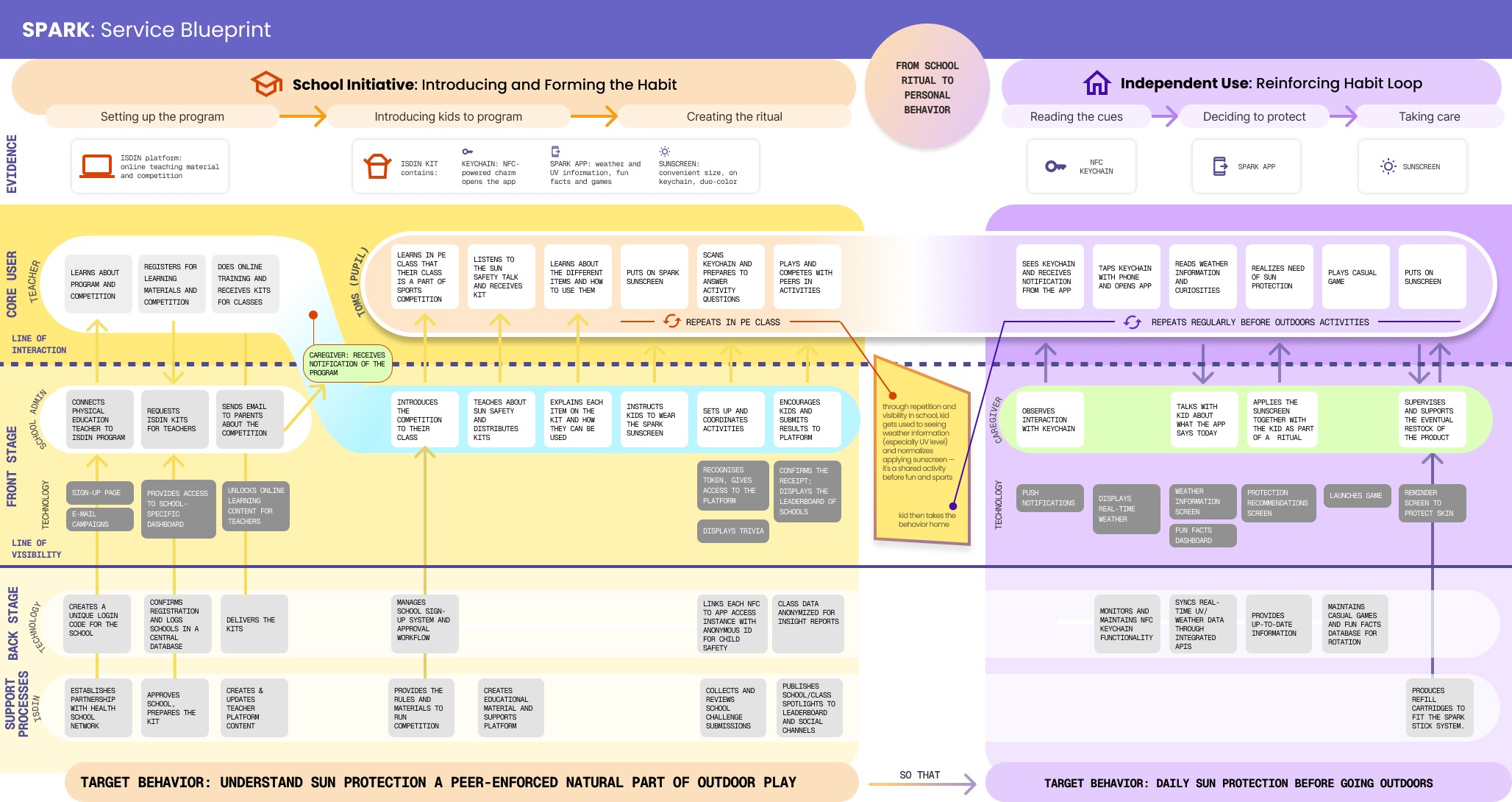
Through journey mapping and service blueprinting, we identified three key leverage points:
Playful interaction at the moment of application
Education through engagement, not instruction
Social reinforcement through schools and group activities
This synthesis led to SPARK, a three-layer service designed to work across physical, digital, and institutional touchpoints.
Prototyping & Testing
We developed low- and mid-fidelity prototypes across all three layers and tested them iteratively.
What We Tested
Physical sunscreen packaging interaction with children
App concepts for clarity, engagement, and age-appropriateness
Teacher platform flows and feasibility within PE classes
Key Learnings
Gamified sunscreen application reduced resistance from children
Children engaged more with weather and UV concepts when framed as play
Teachers valued ready-to-use resources over custom planning
Collective challenges increased motivation and consistency
Feedback directly informed refinements in interaction design, language, and service flow.
Final Outcome
SPARK: A Three-Layer Service Ecosystem
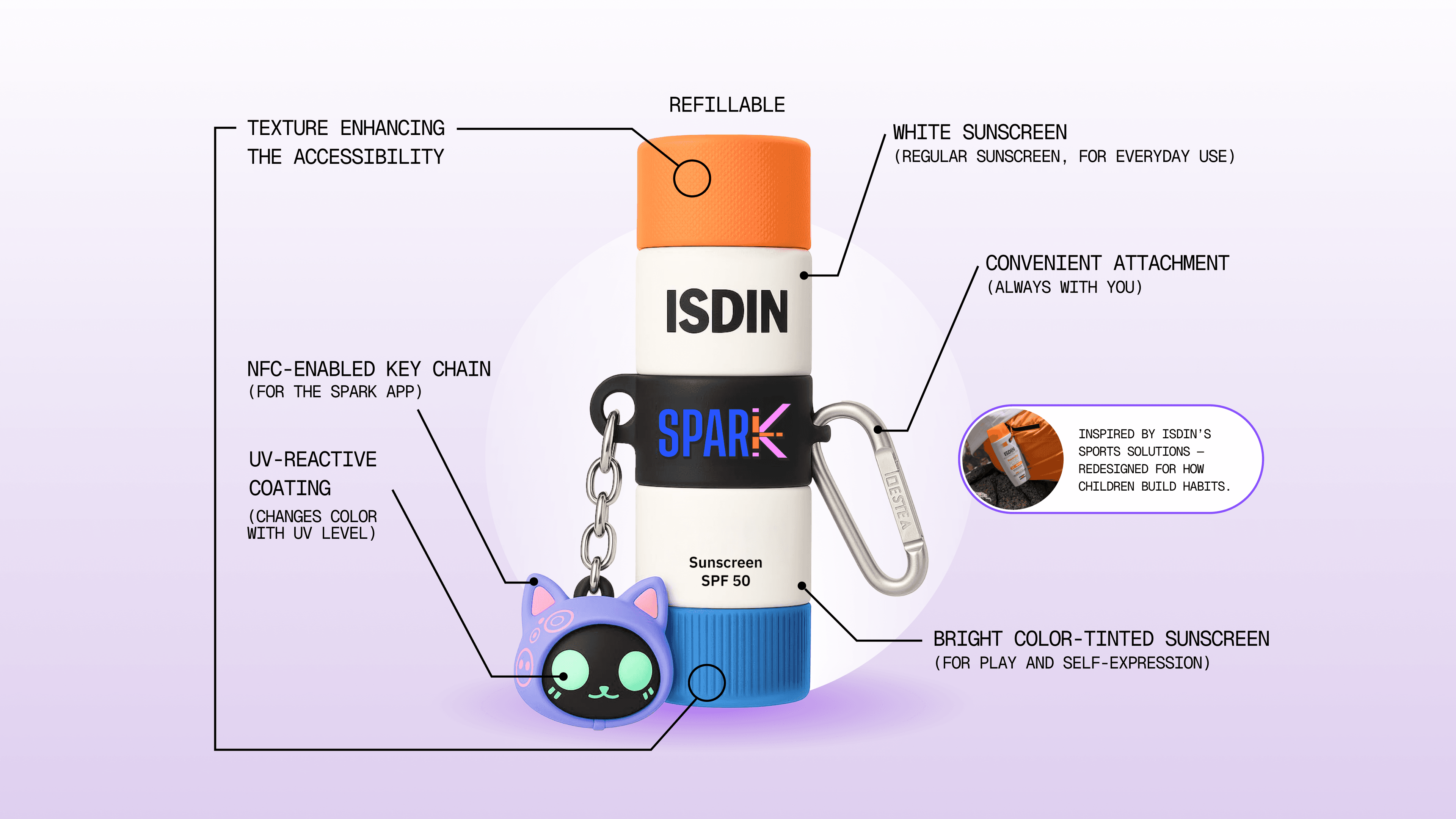
Layer 1: Playful Sunscreen Packaging
A dual-purpose sunscreen with colored game paint, UV-reactive elements, a carabiner for portability, and NFC connectivity to bridge physical and digital experiences.
Layer 2: SPARK App for Kids
A weather-based learning app featuring sun-safety tips, seasonal guidance, fun facts, and a solar flare game that reinforces sun awareness through play.
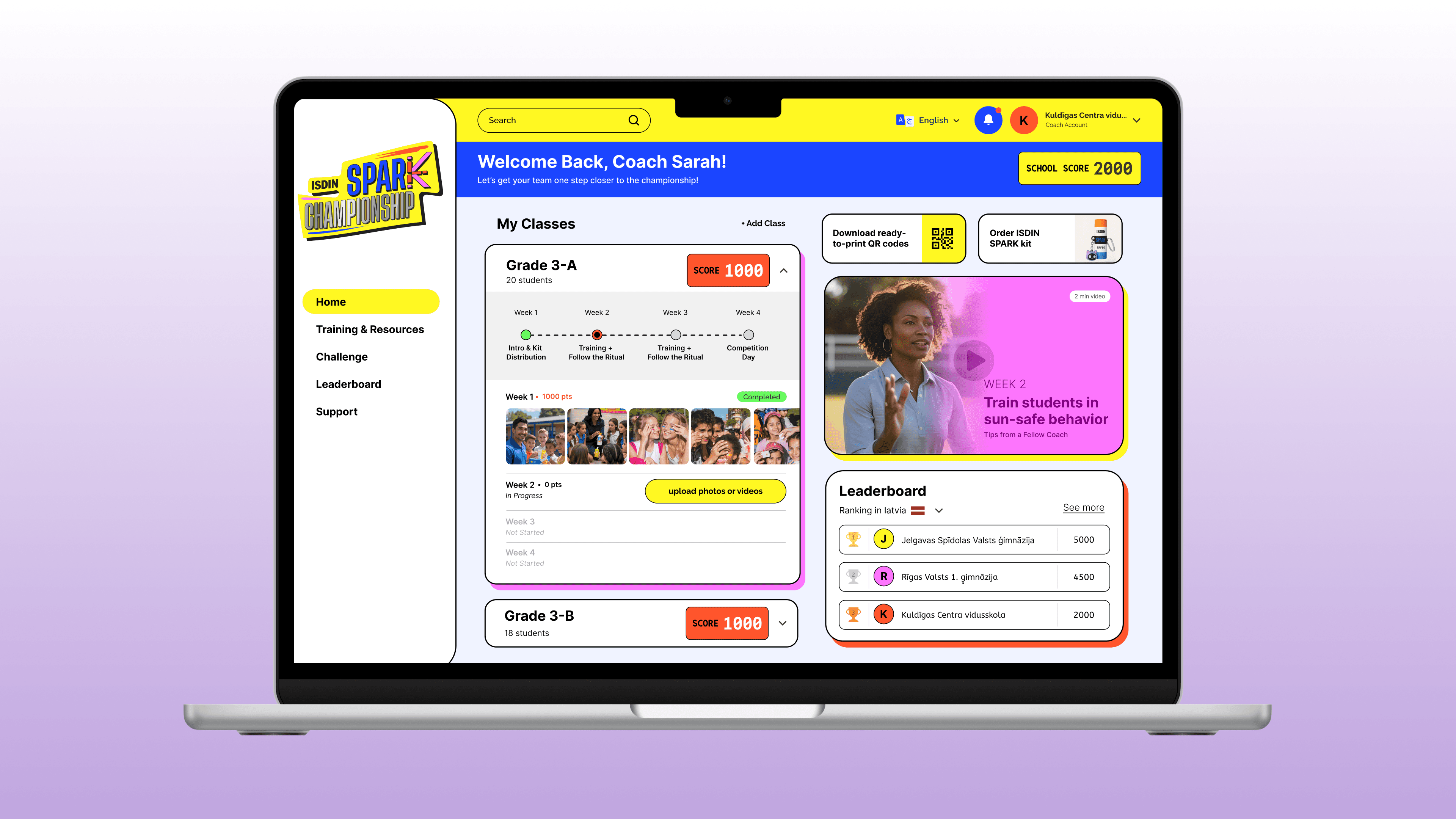
Layer 3: SPARK Challenge (Schools & Teachers)
A PE-class–based international challenge enabling schools to apply, receive SPARK kits, run sunscreen education sessions, and track participation through a teacher platform and leaderboard system.
Together, these layers create a scalable, systemic solution that transforms sunscreen from a daily struggle into a shared, motivating ritual.
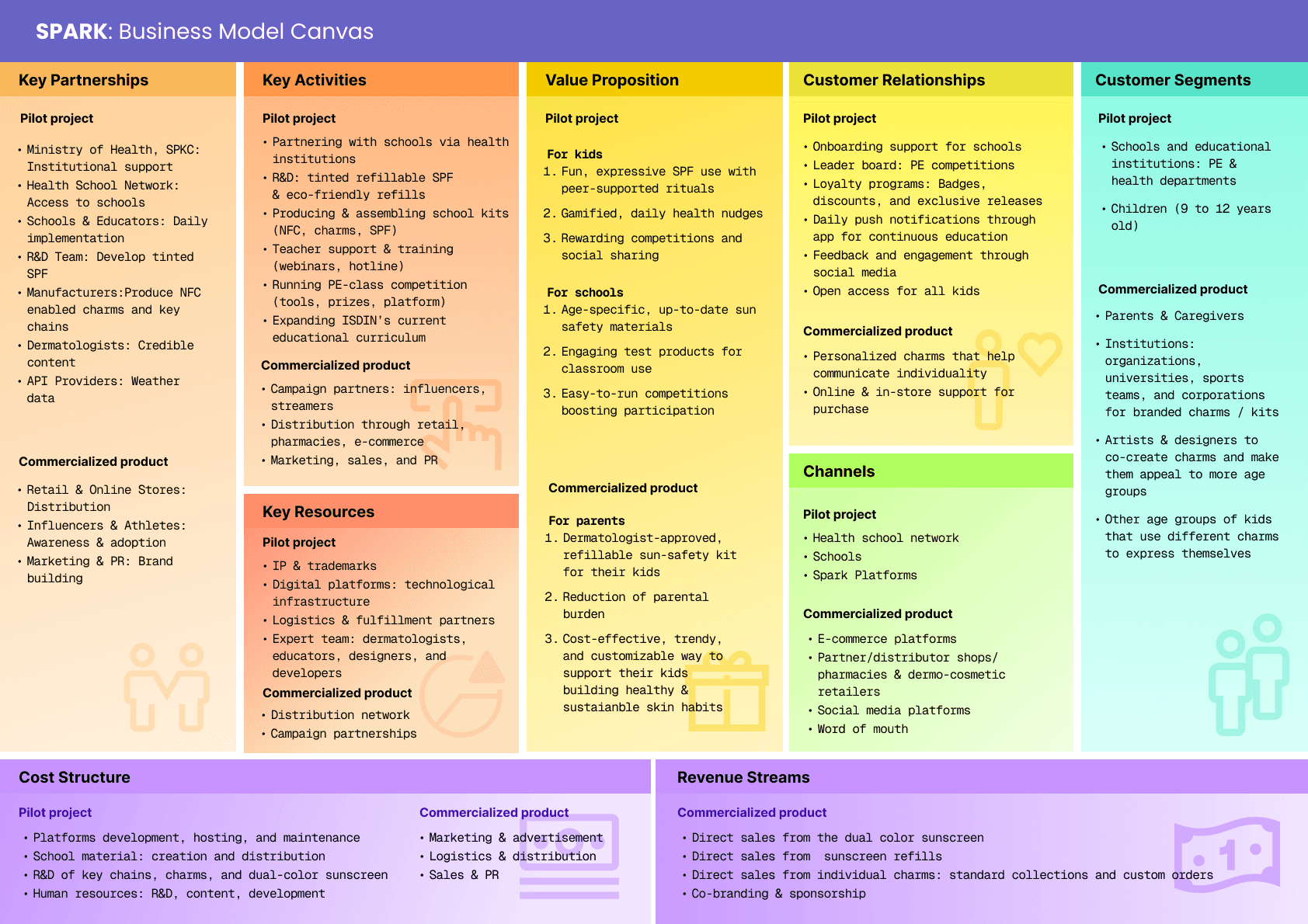
To ensure long-term viability, we mapped how SPARK could scale through schools, partnerships, and educational programs while aligning with ISDIN’s preventive health mission.
Impact & Learnings
Designed a service-led solution spanning product, digital, and institutional systems
Applied behavioral design principles to habit formation in children
Strengthened skills in workshop facilitation, service blueprinting, and multi-stakeholder design
Demonstrated how service design can translate health education into playful, real-world adoption
year
2025
timeframe
4 moths
tools
Figma, Figjam
team
Sobia Iqbal Farooqui, Amanda Strīğele, Lívia Badiani, Nada Joubli, Yuliya Zakolyabina
01

02
see also