AFFORDABLE HOUSING IN TALLINN
A generational, systemic approach to long-term affordability
00
Problem
Housing affordability in Tallinn is rarely one person's problem. It is a system quietly failing people at every stage of life. From pensioners afraid to vote yes on renovations, to single parents locked out of ownership by rising land costs, affordability erodes slowly, structurally, and often invisibly. This project was developed in partnership with the Tallinn Strategic Management Office, pushing us beyond individual interventions toward a coordinated system of services, tools, and governance models that protect affordability not just for first-time beneficiaries, but across generations.
Housing affordability isn't lost in a single moment. It erodes through structural gaps, fragmented ownership, and systems that were never designed to protect people over time.
My Role
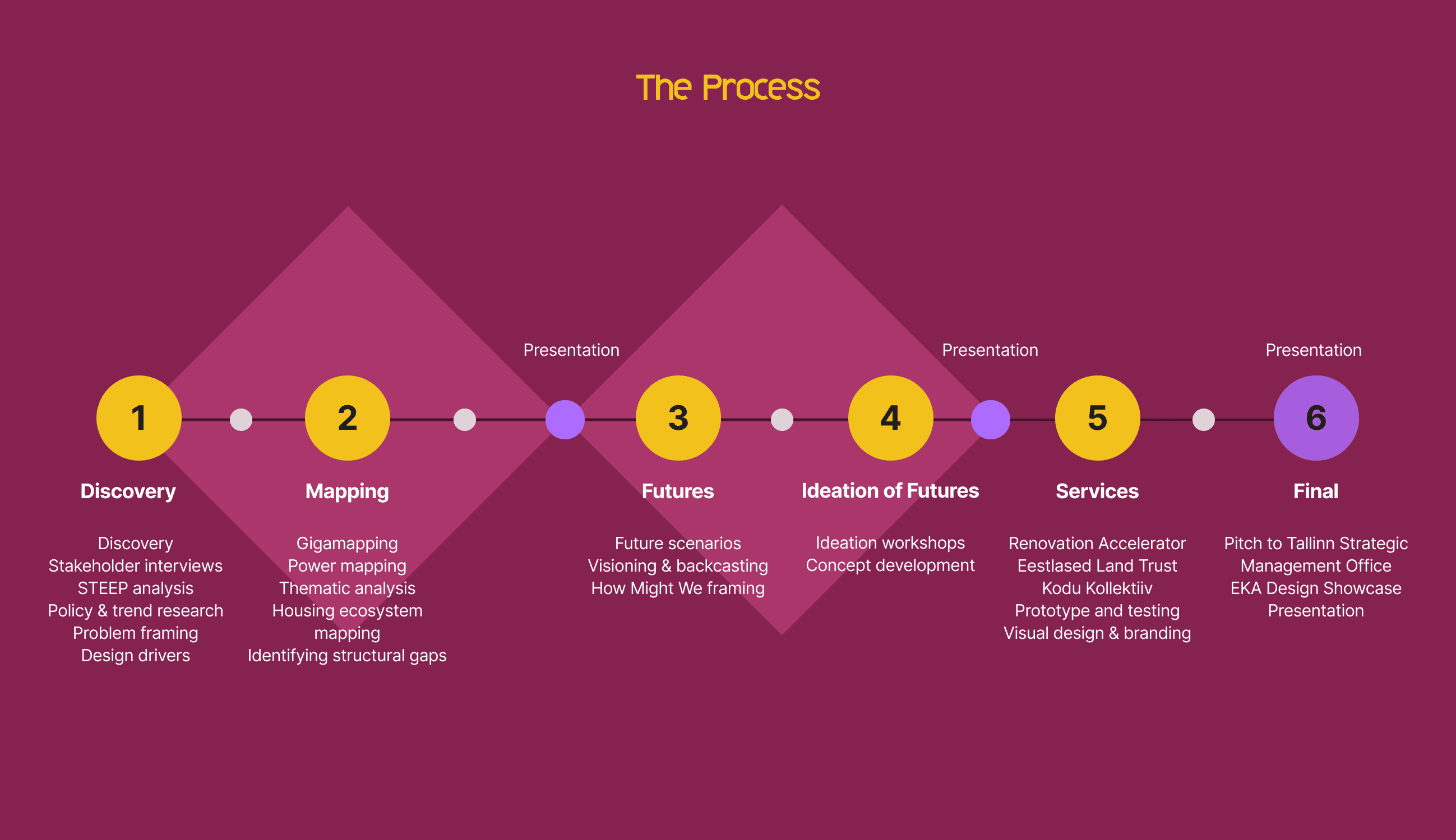
I was deeply involved across all phases of the project, driving key workstreams from research and analysis through to system design, prototyping, and visual delivery. In the research phase, I was one of the core contributors to stakeholder interviews and investigated the systemic problem from multiple angles, including STEEP analysis, power mapping, and thematic analysis. During ideation, I drove the deep research into community land trust models, adapted the concept for the Estonian context, and helped shape the overall system architecture. I built the digital platform prototype using Lovable, and led the branding and design visuals in Figma.
Research & Discovery
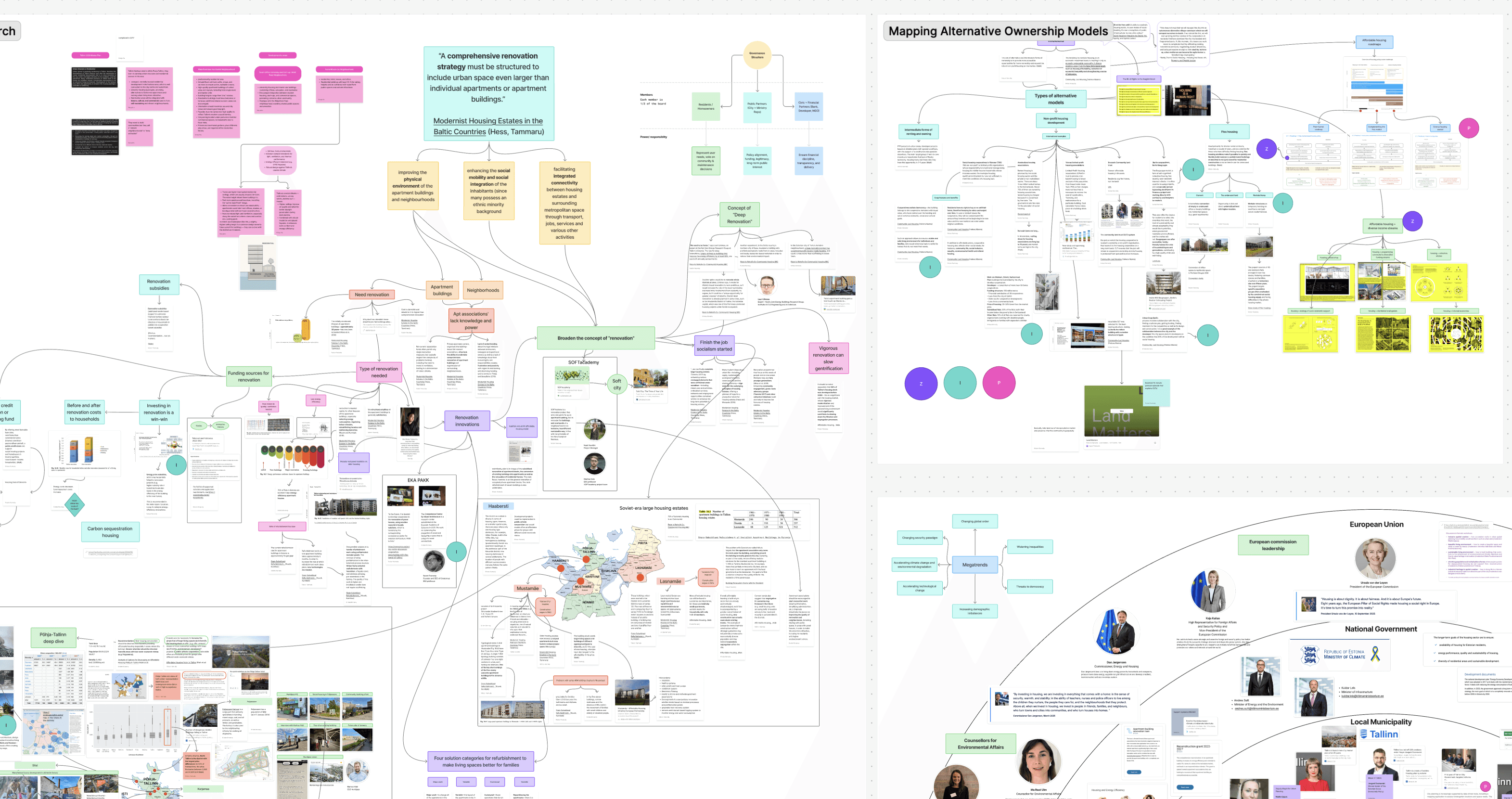
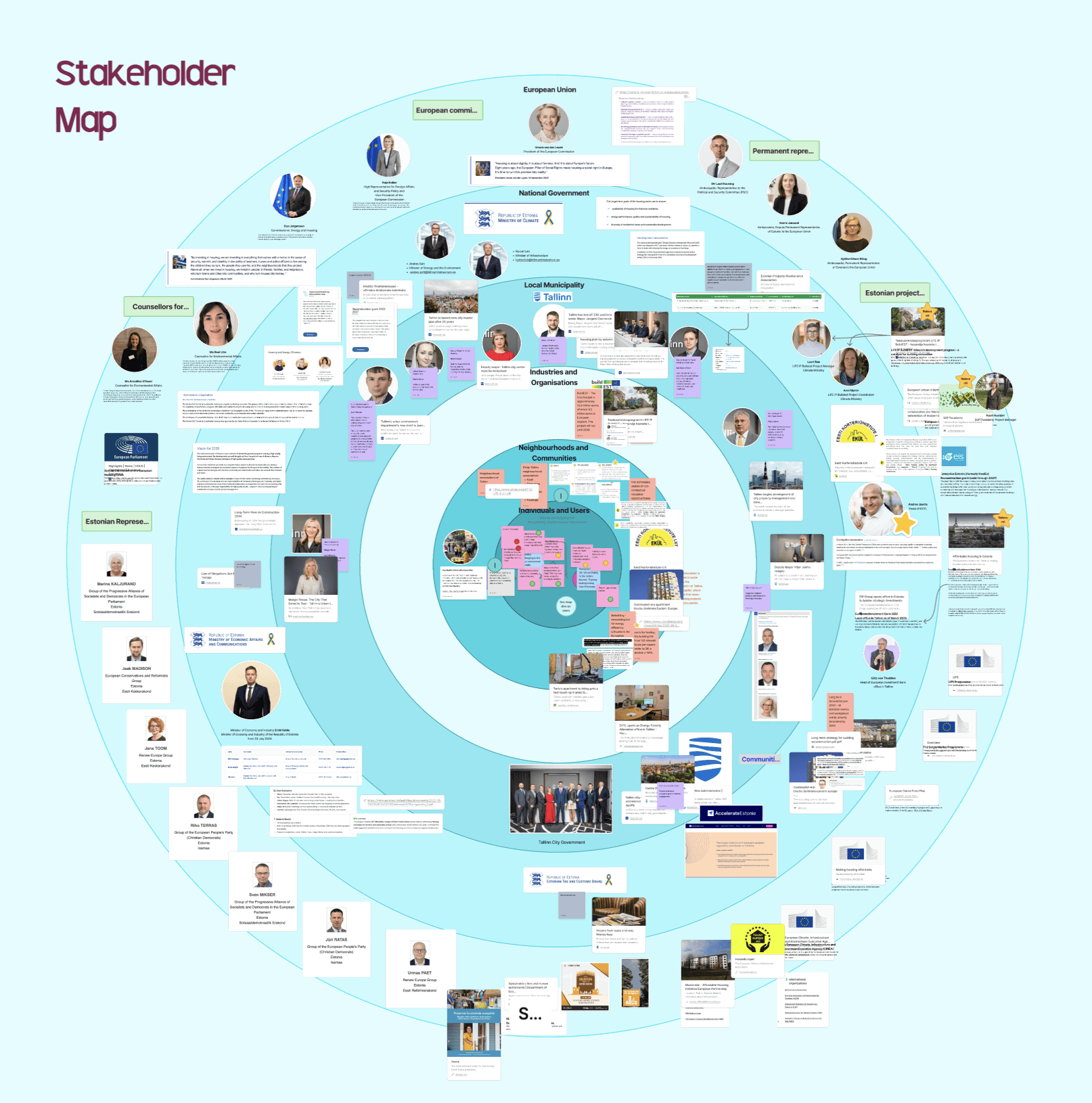
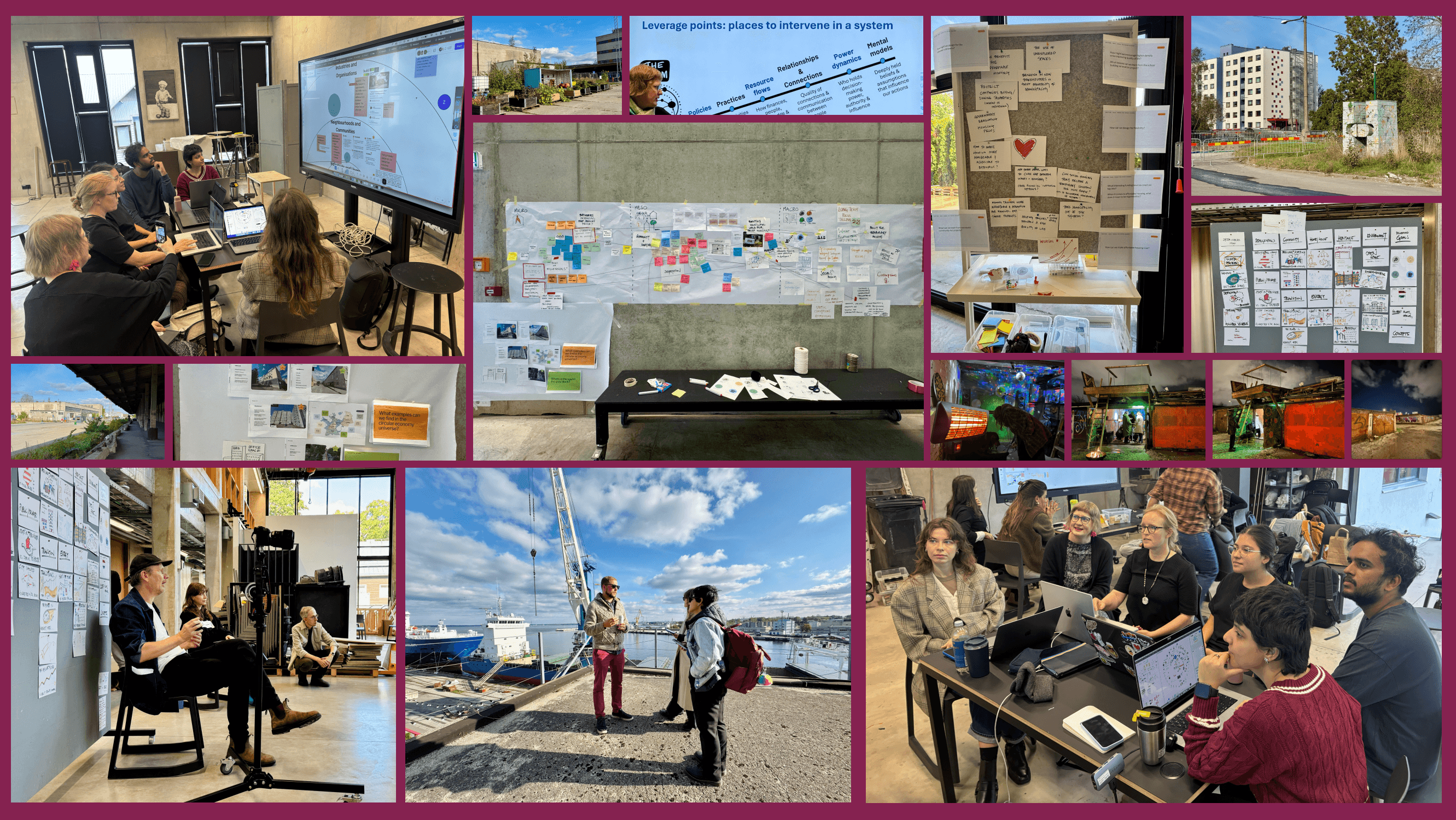
We began with a broad exploration of Tallinn's housing ecosystem, interviewing residents, apartment association representatives, housing experts, and municipal stakeholders, alongside policy analysis, trend research, and system mapping.
What we found changed how we framed the entire problem. Affordability isn't lost in one dramatic moment. It slips away through slow renovation cycles, speculative land markets, and a fragmented system where nobody is truly accountable for the long term.
Research Methods
Stakeholder interviews with residents, housing associations, and municipal actors
Gigamapping to visualise the full housing ecosystem
STEEP and power analysis to map structural forces
Thematic analysis to identify patterns across lived experiences
Futures thinking and speculative design to explore long-term scenarios and possibilities
Policy review and trend research into European housing models
Key Insights
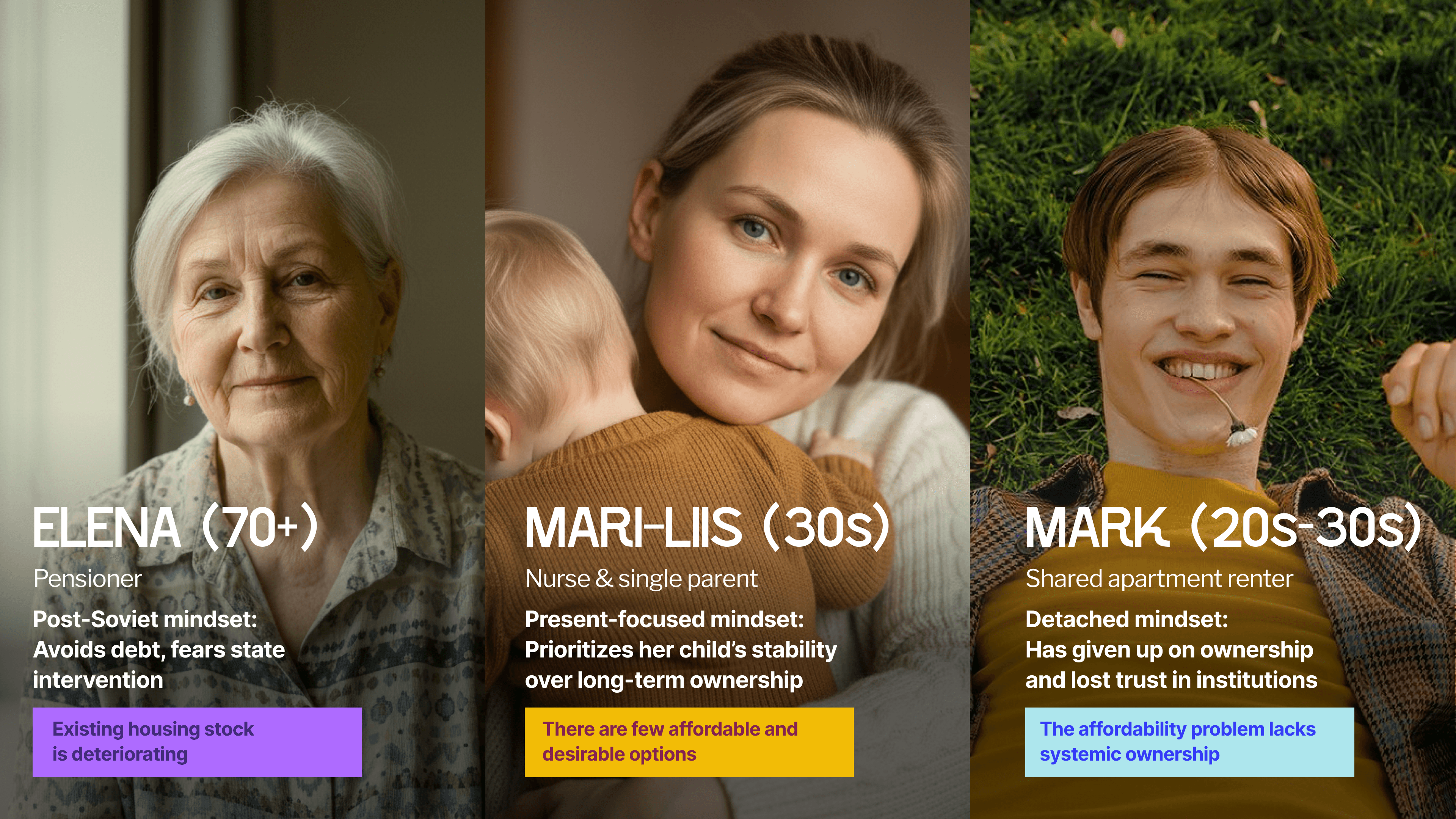
Renovation resistance is driven by financial fear, not unwillingness. Older residents, particularly pensioners, often vote against renovations because they cannot afford loans or fear passing debt to their families. The current system lacks the confidence, coordination, and predictability residents need to say yes.
Land cost is the root cause of long-term unaffordability. High land prices make new housing unaffordable from the start. Speculative buying accelerates price inflation while affordable options get pushed to poorly serviced areas. Groups like single parents are especially vulnerable.
No single actor owns the affordability problem. Many organisations operate within the housing ecosystem, but very few focus simultaneously on affordability, systemic change, and long-term action. The result is fragmentation, knowledge gaps, and a lack of accountability over time.
How might we create a housing system in Tallinn that protects affordability across generations, supporting renovation, access to ownership, and long-term stewardship, without placing the burden solely on individuals or families?
Ideation & Synthesis
Rather than designing a single solution, we designed a layered housing system where each intervention addresses a different moment in the affordability lifecycle.
Through systems mapping and stakeholder journey work, we identified three critical leverage points where the system was most broken and most open to change.
Final Outcome
A Three-Part Housing Framework
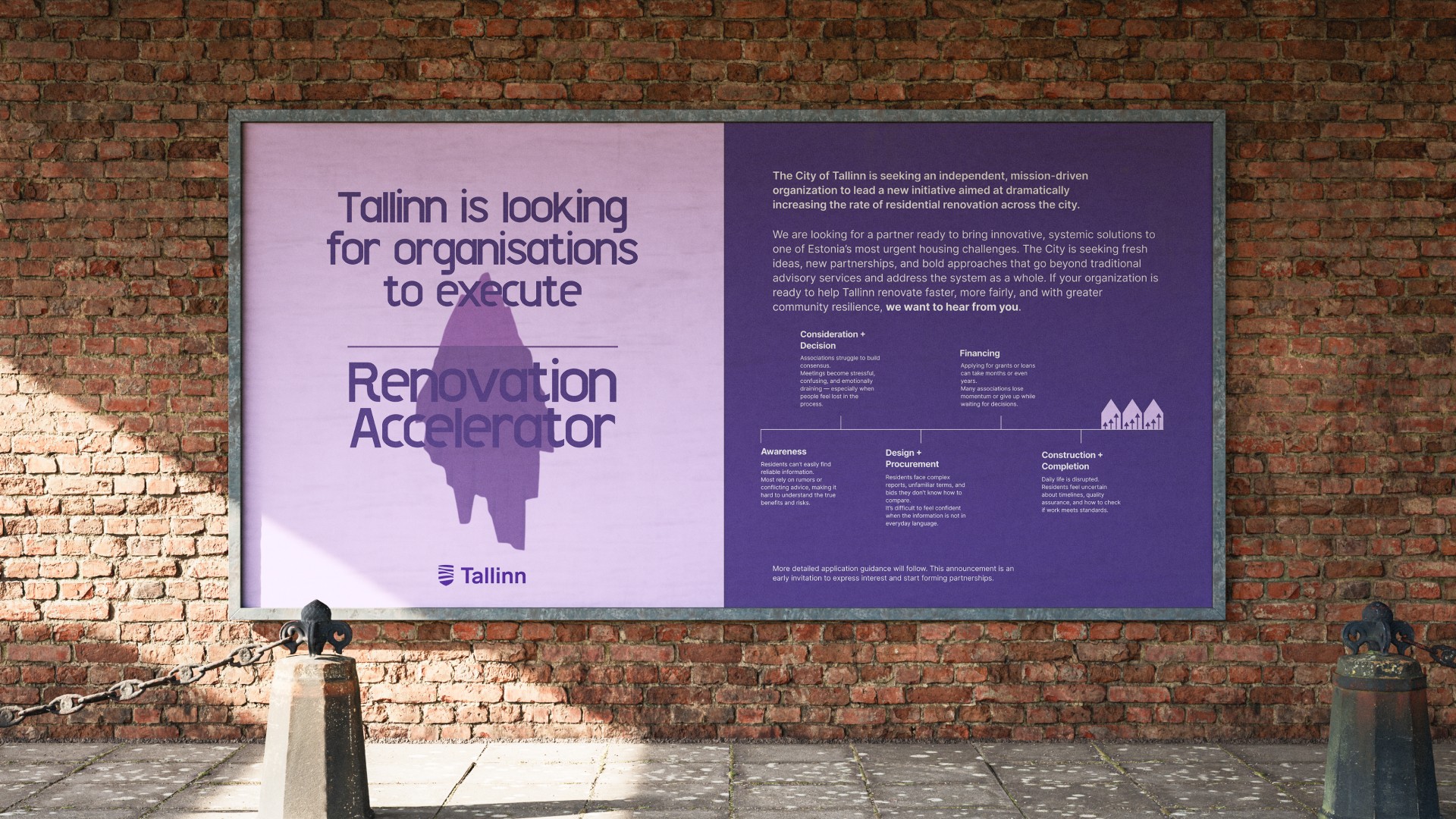
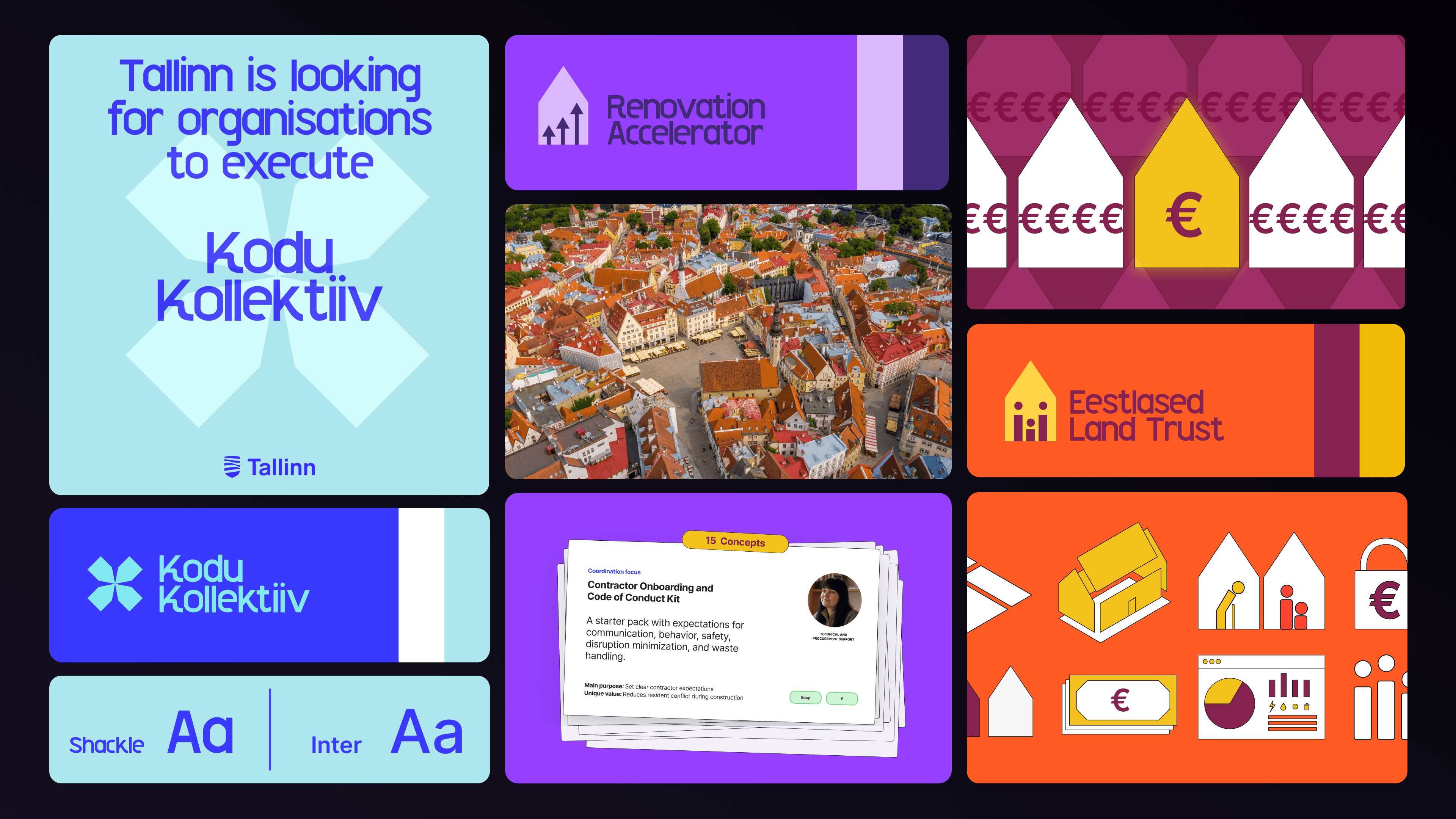
1. Renovation Accelerator
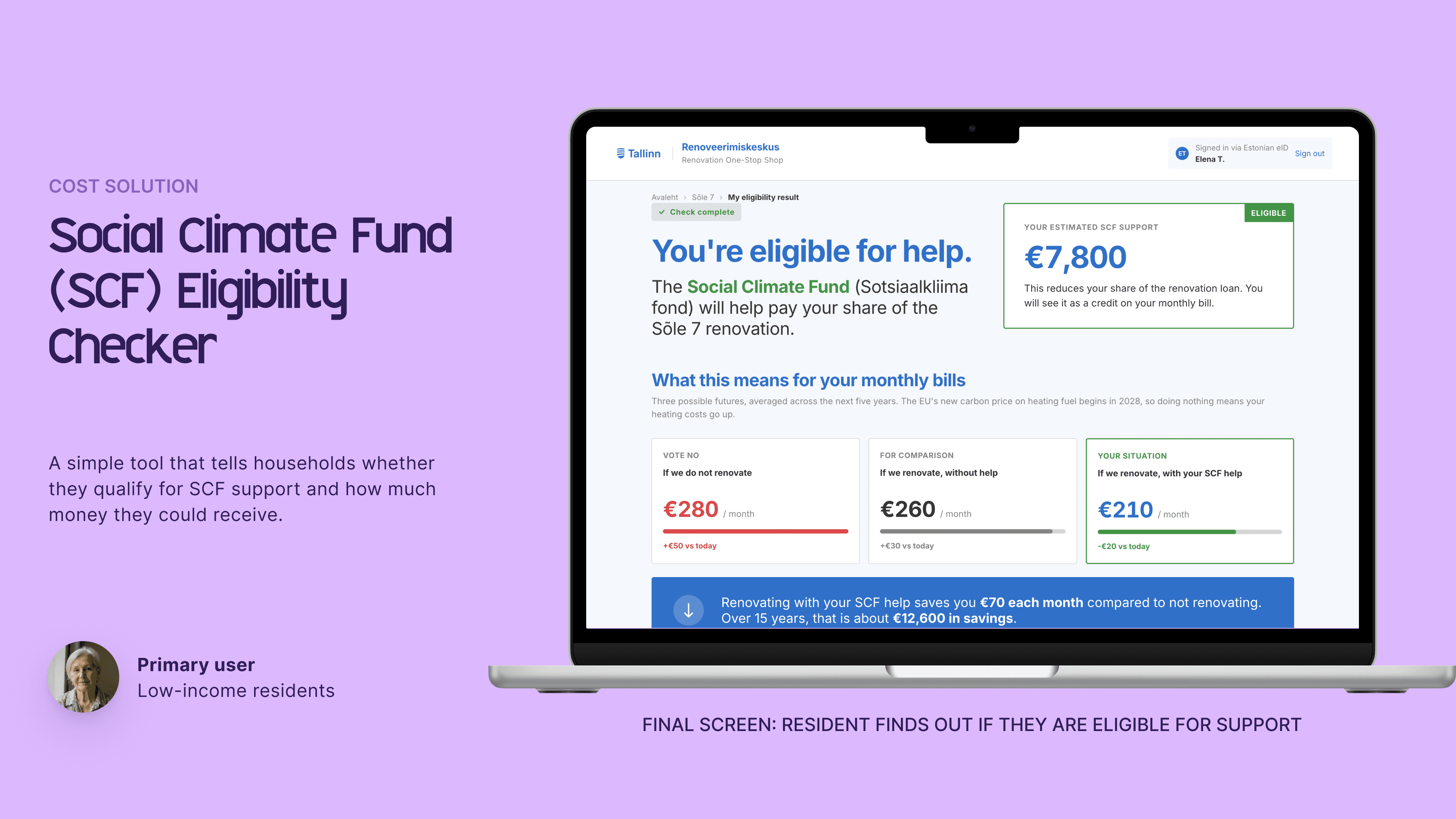
A municipality-aligned accelerator that works alongside Tallinn's One-Stop-Shop, giving apartment associations the tools, coordination, and confidence to move from hesitation to action.
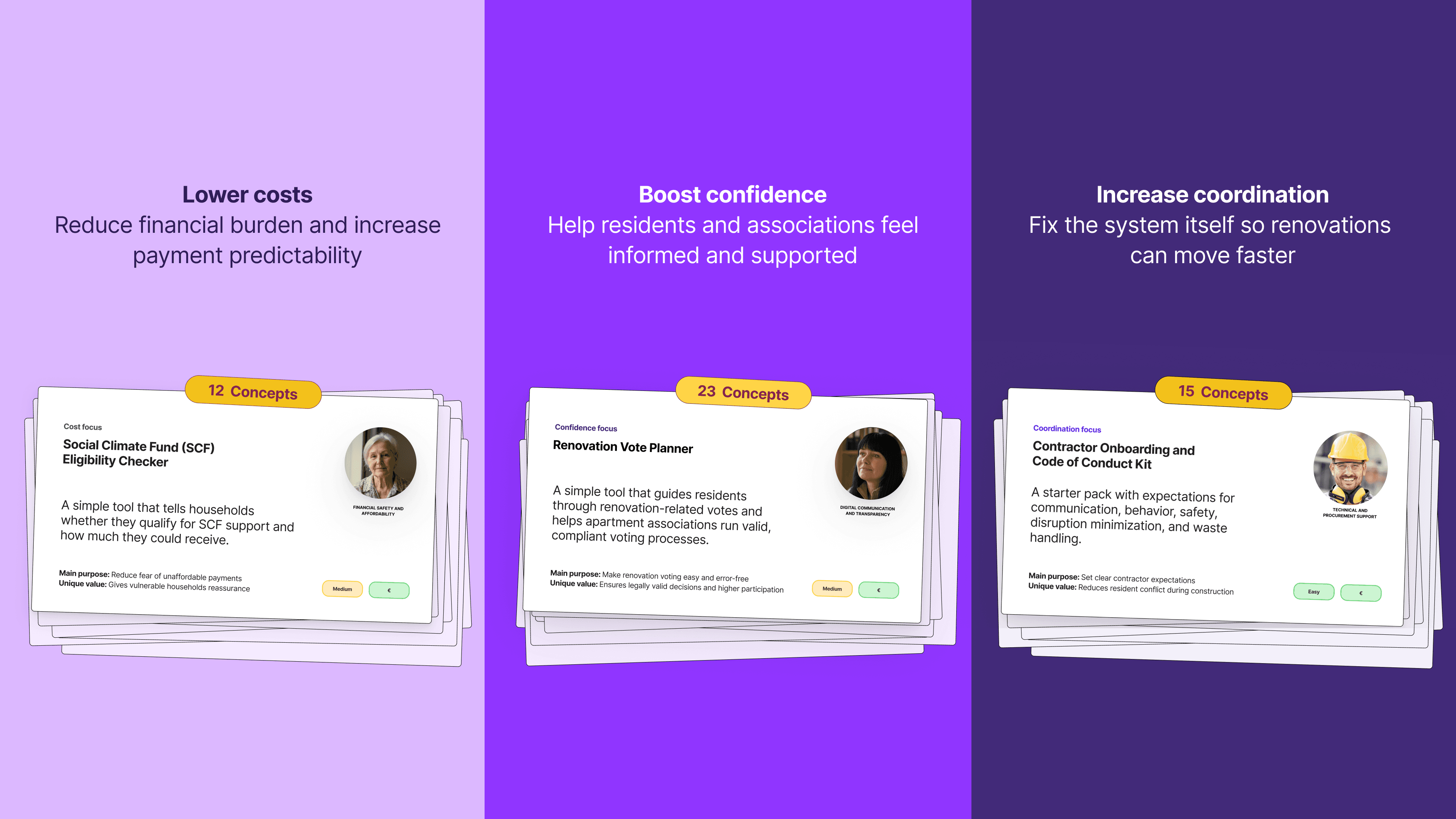
Solutions were clustered around three needs:
Cost: reducing financial burden and increasing payment predictability
Confidence: making renovation understandable, transparent, and socially supported
Coordination: fixing systemic bottlenecks so renovations can scale
Rather than treating renovation as a one-off project, the accelerator functions as an enabling system, coordinating residents, experts, contractors, and public partners over time.
2. Eestlased Land Trust (ELT)
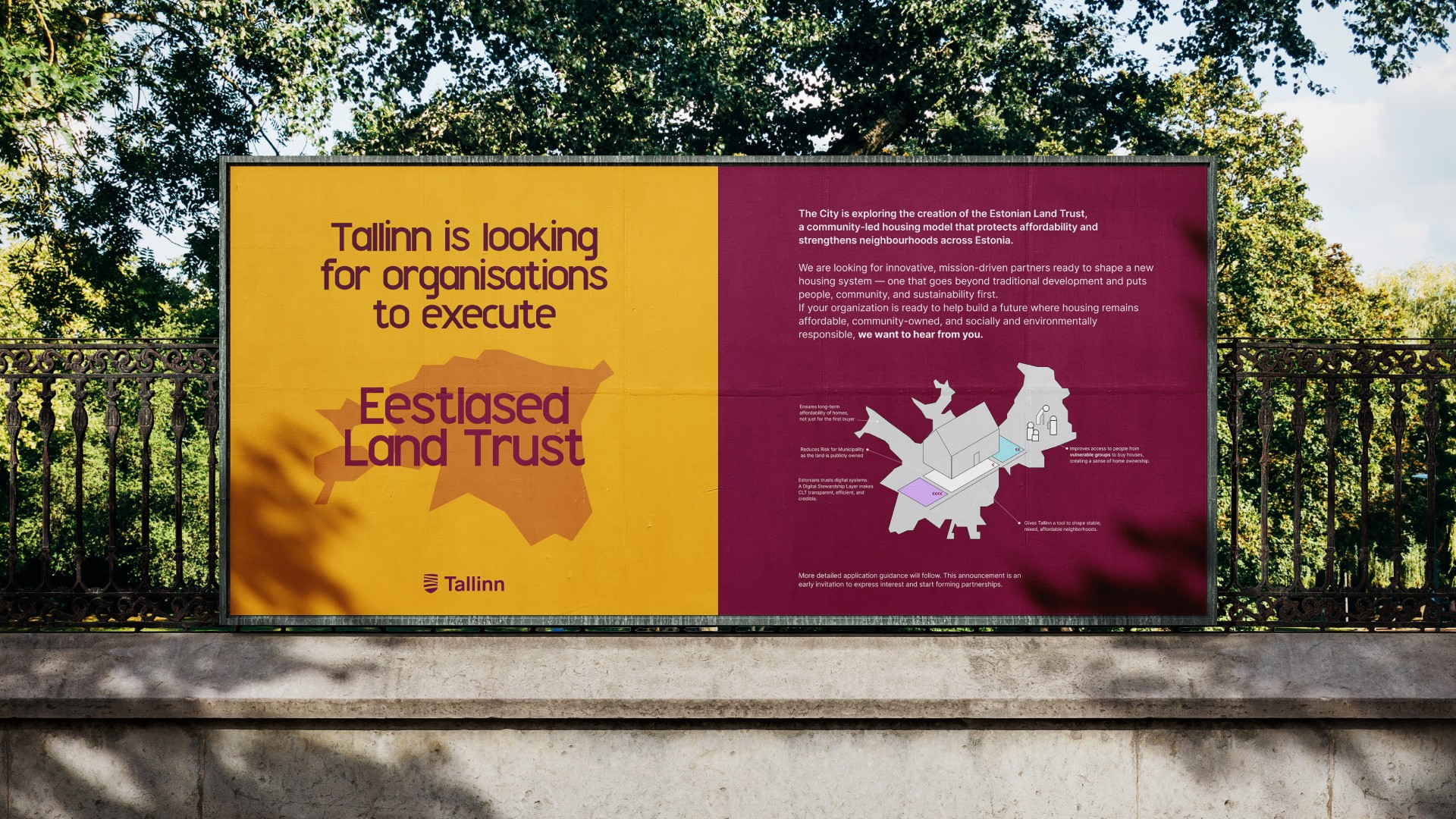
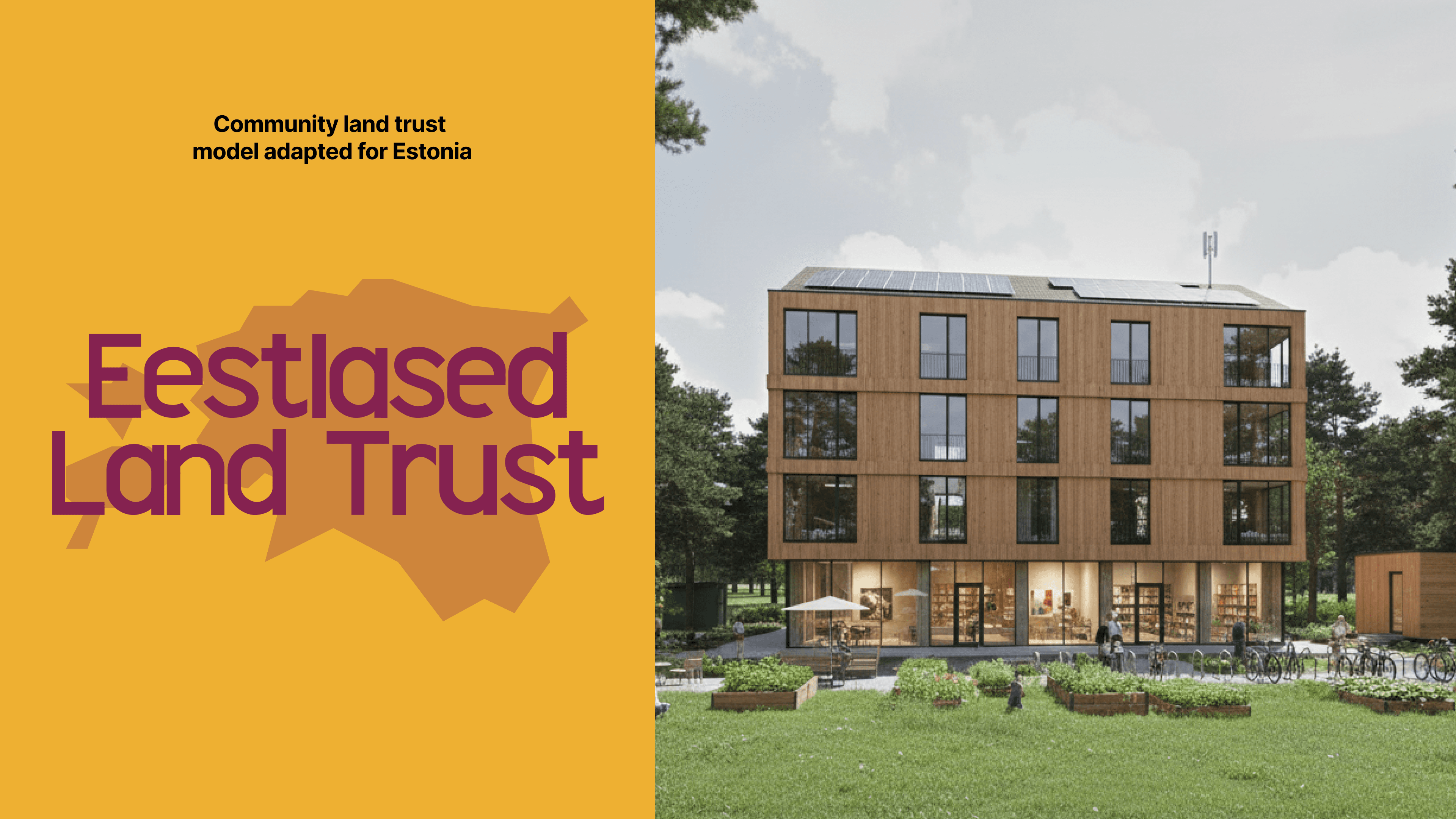
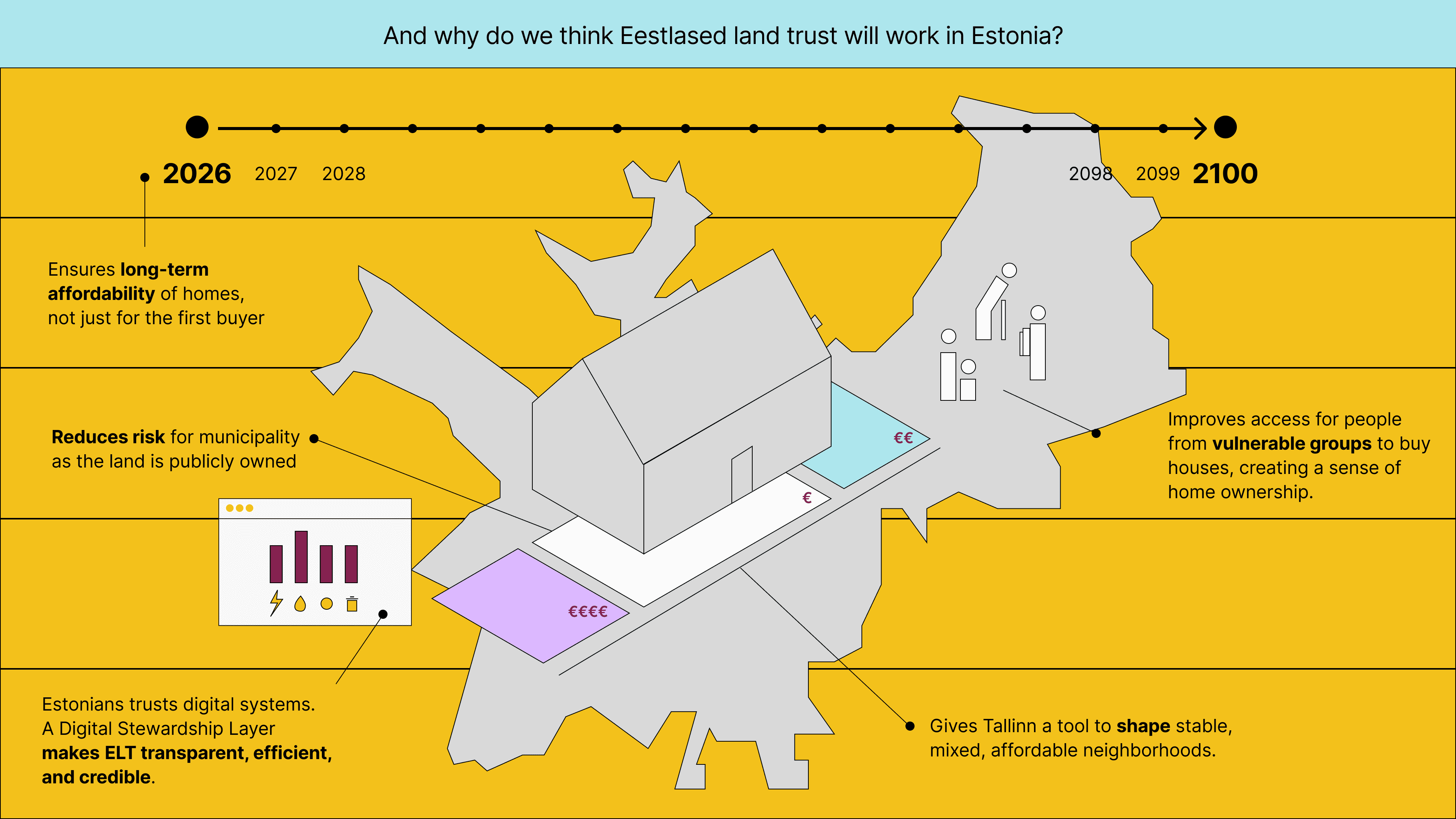
A Community Land Trust model adapted for Estonia, where the municipality retains ownership of land while homes remain affordable through long-term leases and resale price caps.
This responds directly to people like Mari-Liis, a single parent and nurse whose stable income still cannot keep pace with rising housing costs. For people like her, ownership represents security. The market offers no realistic entry point.
The ELT model is built on three pillars:
Public land stewardship
Legal affordability covenants
Shared governance between residents, city, and partners
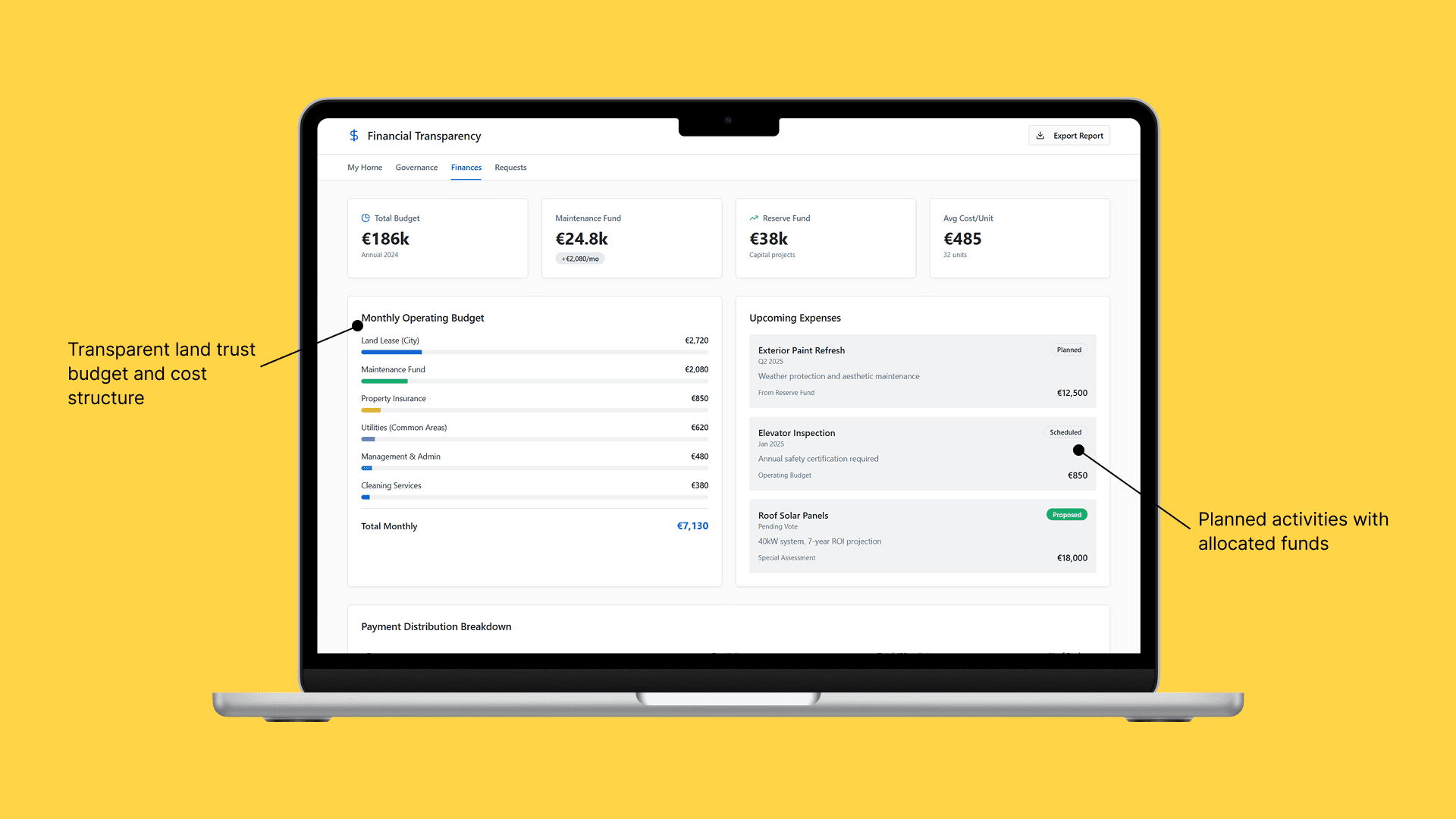
A digital stewardship platform, prototyped using Lovable, ensures transparency, allowing residents to track costs, documents, and governance decisions, while enabling the city to monitor long-term impact.
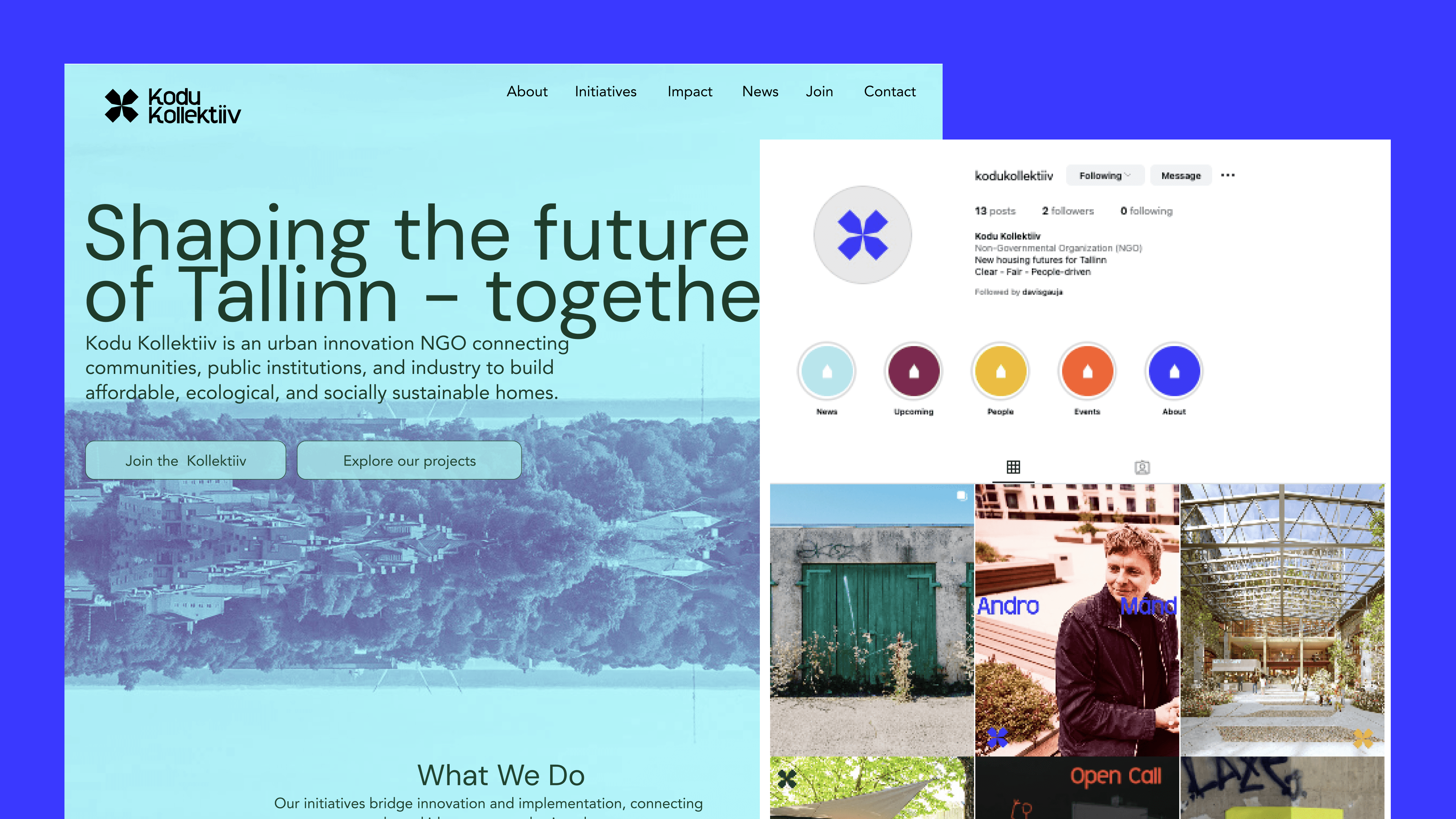
3. Kodu Kollektiiv
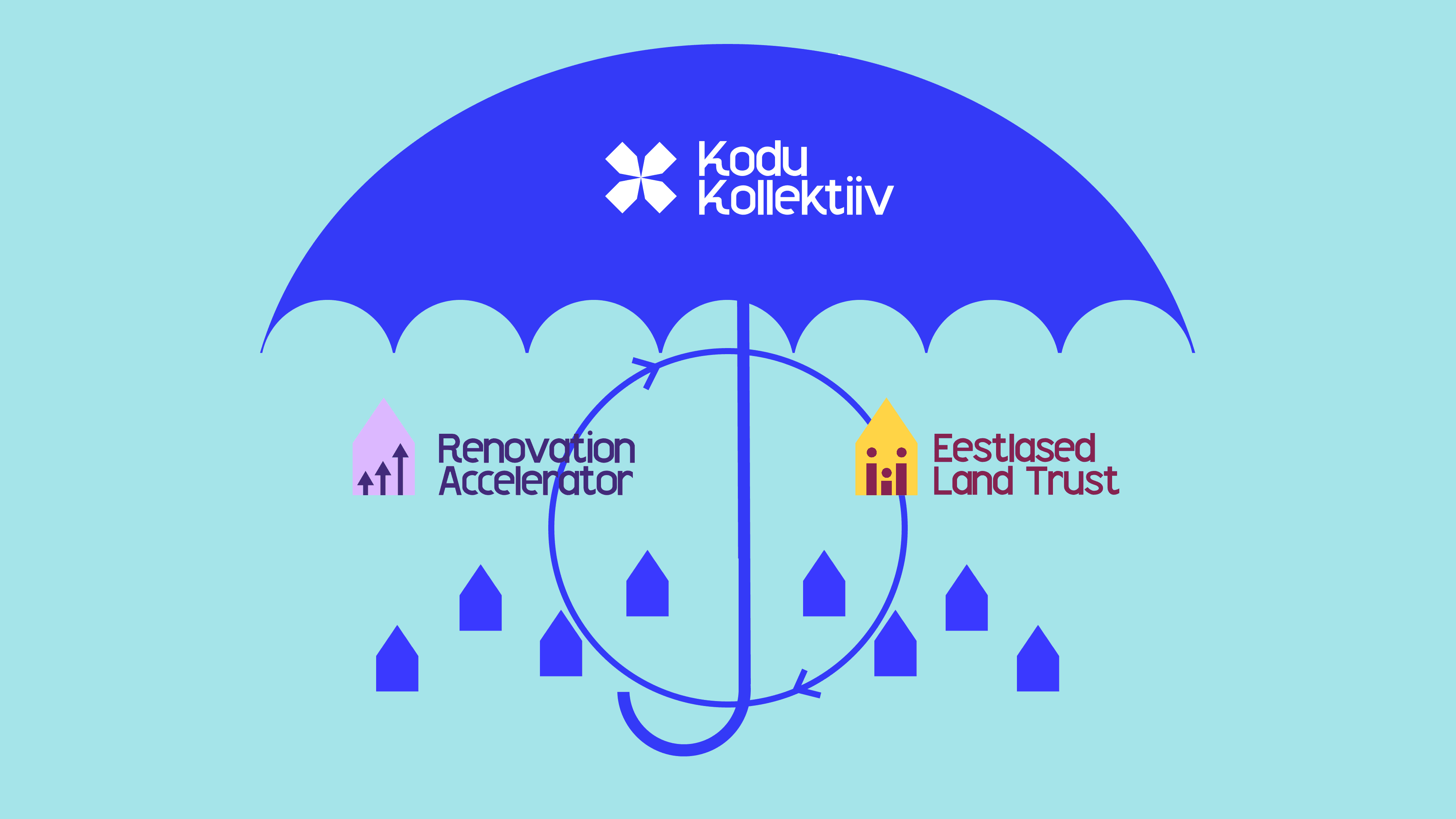
A common-interest organisation bridging citizens, municipalities, and industry. It translates complex housing challenges into shared knowledge, advocates for systemic change, and accelerates new housing models, providing the connective tissue the ecosystem currently lacks.
Impact & Learnings
Designed a regenerative housing system operating at the intersection of policy, service design, and lived experience
Applied systems thinking and futures methods to test how interventions perform over decades, not just at launch
Adapted an internationally proven model, the Community Land Trust, to fit Estonia's legal, cultural, and digital context
Demonstrated how service design can shape not just services, but the long-term conditions people depend on to feel secure at home
Strengthened skills in STEEP analysis, power mapping, service blueprinting, and multi-stakeholder co-design
Selected by the Tallinn Strategic Management Office as one of the most creative and innovative solutions, leading to a presentation at the EKA Design Showcase
year
2025
timeframe
4 months
tools
Figma, Figjam and Lovable
team
Sobia Iqbal Farooqui, Amanda Strīģele, Kristen Kennedy, Margarita Cajas, Abhijit Balaji
01
02
03
04
see also